
- Prism Media
- Thursday, August 19th, 2021
- 485 views
- no Comments
How to Become a Motion Graphics Artist in India: Skills, Software & Career Path
How to Become a Motion Graphics Artist in India: Skills, Software & Career Path
Prism Media Animation Insight | Career Guide 2026 | Motion Graphics
Motion graphics sits in a strange, underrated spot in creative careers — it’s not quite full 3D animation, not quite traditional graphic design, and not quite video editing, but it borrows from all three. That in-between position is exactly why demand for motion graphics artists has exploded in the last few years, driven by the sheer volume of short-form video content every brand, YouTuber, and OTT platform now needs.
At Prism Media Animation, our Video Editing & Motion Graphics program in Bhubaneswar is built directly around this demand. Here’s a realistic, practical breakdown of what it actually takes to build a career in this field.
What Does a Motion Graphics Artist Actually Do?
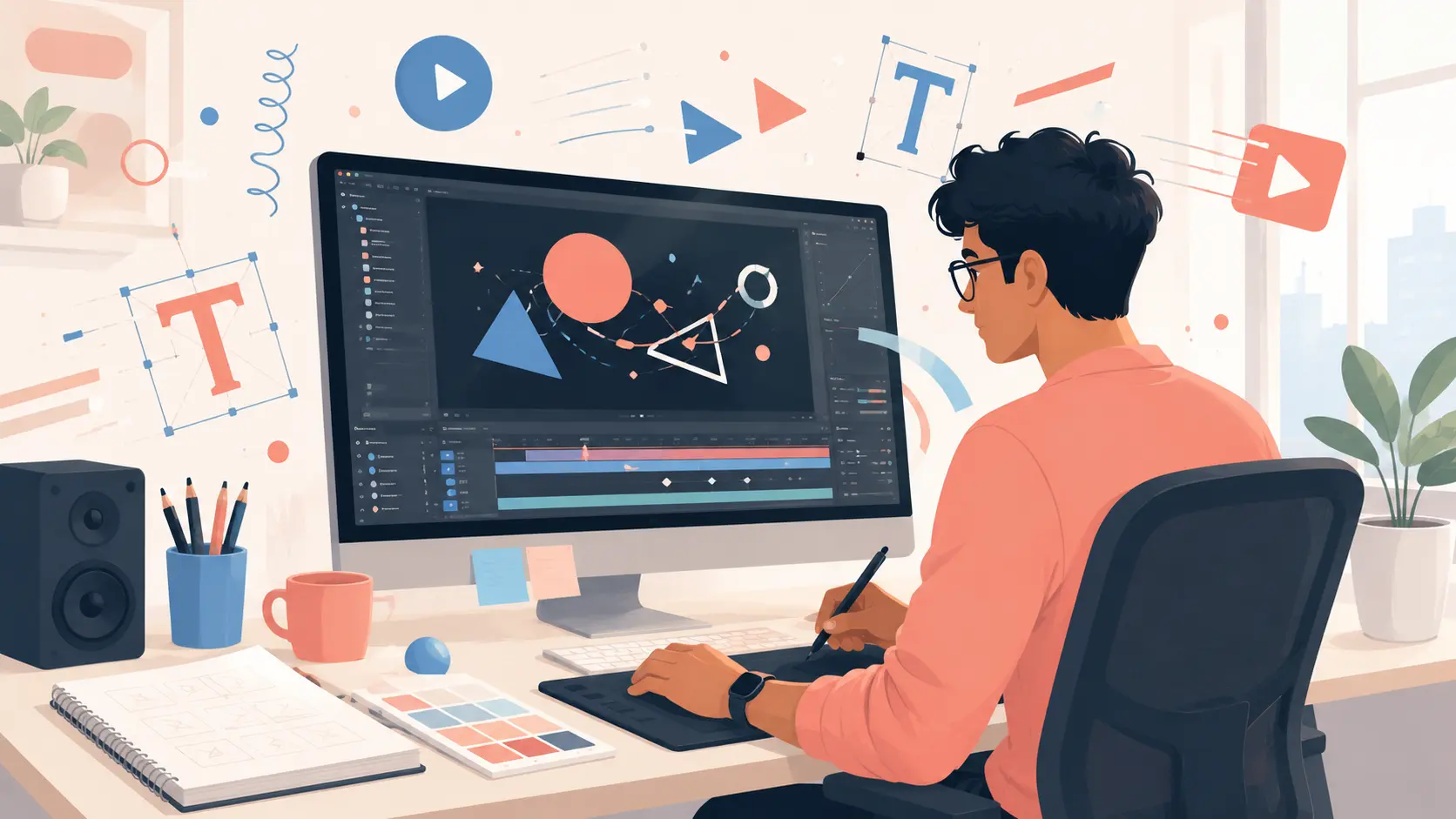
A motion graphics artist animates graphic elements — text, icons, logos, charts, illustrations — rather than characters or realistic 3D scenes. Think of the animated title sequences on a Netflix show, the kinetic typography in a brand’s Instagram reel, the animated infographics in an explainer video, or the lower-third graphics on a news broadcast. It’s design that moves, built to communicate information quickly and hold attention in a feed full of competing content.
9 Steps to Building a Motion Graphics Career in India
1. Start With Strong Graphic Design Fundamentals
Before animating anything, you need to understand composition, color theory, and typography — the same fundamentals graphic designers rely on. Motion graphics without strong static design underneath it just looks like movement for its own sake, without real visual clarity.
2. Learn Adobe After Effects Deeply
After Effects is the industry-standard tool for motion graphics work in India and globally. Keyframe animation, easing curves, and layer-based compositing are core skills you’ll use on nearly every project, regardless of specialization within the field.
3. Understand the Principles of Animation — Even Without Character Work
Timing, easing, and anticipation matter just as much in a logo reveal or an animated chart as they do in character animation. A text animation that snaps in and out abruptly reads as amateur; one with proper easing and timing reads as professional, even with identical content.
4. Add Adobe Illustrator and Photoshop to Your Toolkit
Most motion graphics work starts with static design assets built in Illustrator or Photoshop before being brought into After Effects for animation. Being weak on the design side directly limits the quality of your motion work.
5. Learn Cinema 4D or Blender for 3D Motion Graphics
A growing share of high-end motion graphics work — especially in advertising and broadcast design — blends 2D motion graphics with 3D elements. Cinema 4D (paired with After Effects via plugins) and Blender are both increasingly expected skills for mid-to-senior motion graphics roles.
6. Build Fluency in Kinetic Typography
Animated text — kinetic typography — is one of the most in-demand, high-frequency motion graphics deliverables, used constantly in social media content, explainer videos, and brand campaigns. It’s also one of the fastest ways to build a strong demo reel early, since it requires less asset creation than full illustration-based animation.
7. Get Comfortable With Sound Syncing
Motion graphics that sync tightly to music or voiceover timing reads as significantly more polished than motion that ignores audio entirely. This is an underrated skill that separates strong reels from average ones — and it’s easy to practice on your own with any royalty-free track.
8. Study Real Broadcast and Brand Work, Not Just Tutorials
Tutorials teach you which buttons to press. Studying actual broadcast graphics packages, brand explainer videos, and title sequences teaches you pacing, hierarchy, and restraint — the things that separate professional output from tutorial-quality output.
9. Build a Reel Around Real (or Realistic) Client Briefs
A demo reel built around fictional but realistic client briefs — a mock brand explainer, a mock title sequence for a show that doesn’t exist — demonstrates problem-solving in a way that random unconnected animation exercises don’t. Recruiters and clients want to see that you can execute a full concept, not just isolated tricks.
Where the Actual Jobs Are
- In-house motion designer at ad agencies and marketing teams
- Broadcast graphics artist for news channels and OTT platforms
- Freelance motion graphics work for brands and YouTubers
- Explainer video studios (a fast-growing niche on its own)
- Social media content teams at growing D2C brands
Freelance motion graphics work in particular has become one of the more accessible entry points into the creative industry, since small businesses and content creators consistently need short, polished video assets but rarely have budget for a full in-house team.
How Motion Graphics Differs From Full 3D Animation
Motion graphics artists typically don’t need the deep character rigging, weight, and performance skills that 3D character animators build over years. The trade-off is that motion graphics projects tend to move faster — turnarounds are often days, not weeks — which means the career rewards artists who can work efficiently under tighter deadlines and iterate quickly based on client feedback.
Frequently Asked Questions About Motion Graphics Careers
Is motion graphics a good career choice compared to 3D animation?
Both are strong choices with different demands. Motion graphics tends to have faster turnaround work and lower barriers to entry-level freelancing, while 3D animation typically requires a longer skill-building runway but opens into film, gaming, and VFX studio work.
What software should I learn first for motion graphics?
Start with Adobe After Effects alongside Illustrator and Photoshop for design fundamentals. Add Cinema 4D or Blender later once you’re comfortable with 2D motion work and want to expand into 3D motion graphics.
Can I freelance as a motion graphics artist without studio experience first?
It’s more feasible in motion graphics than in most other creative fields, since project scopes are often smaller and turnarounds faster — but studio or agency experience early on still accelerates skill growth and client-handling ability significantly.
How long does it take to build a job-ready motion graphics portfolio?
With consistent, focused practice, most students can build a strong entry-level reel within six months to a year — faster than most 3D animation specializations, since motion graphics projects require less asset-building time.
Want to Build a Career in Motion Graphics at Prism Media Animation?
Explore professional training in:
- Video Editing & Motion Graphics
- Graphic Design
- Animation & VFX
Prism Media Animation – Learn. Create. Transform.

Prism Media
Search
Categories
- Animation (9)
- Computer (2)
- graphic design (6)
- Photography (2)
- Uncategorized (6)
- Visual effects (2)
Latest Post
-
Monday, February 2nd, 2026
10 Things You Need to Know About a 3D Animation Career in 2026
-
Thursday, October 3rd, 2024
10 Software Tools Every 3D Animation Student Must Learn in 2026
-
Tuesday, July 25th, 2023
-
Monday, December 26th, 2022
Things to Check Before Choosing a 3D Animation Institute in Bhubaneswar
-
Saturday, July 9th, 2022

Book a Free Demo
Experience the difference with our programs! Book a free demo to explore how our courses can help you achieve your academic and career goals. Don't miss this opportunity! Schedule your free demo today and take the first step towards a brighter future!
Book Now© Copyright 2026 by PrismMedia
0 Comment