
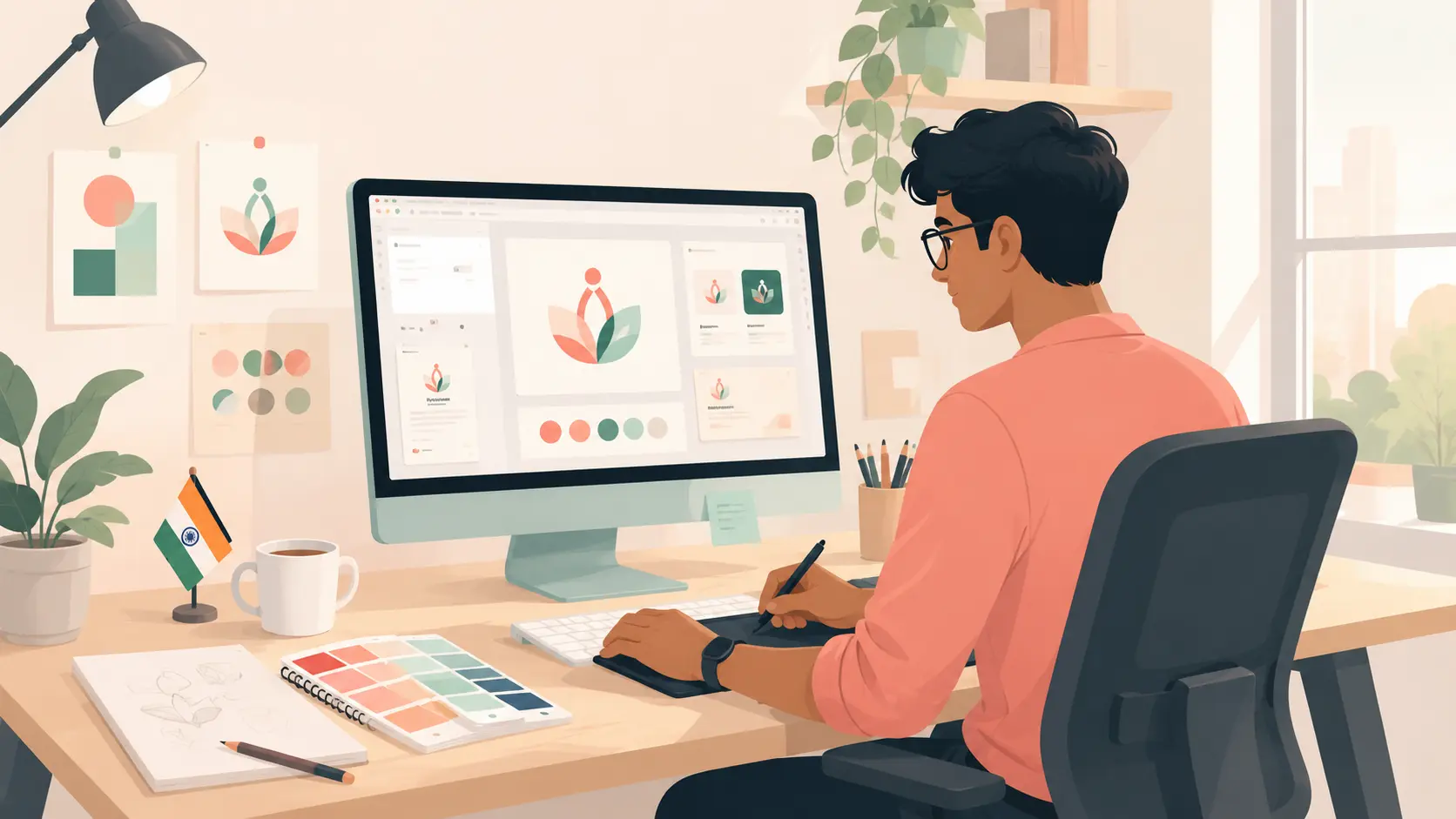
- Prism Media
- Monday, September 13th, 2021
- 552 views
- no Comments
Graphic Design Career Guide 2026: Skills, Software & Job Roles You Need to Know
Graphic Design Career Guide 2026: Skills, Software & Job Roles You Need to Know
Prism Media Animation Insight | Career Guide 2026 | Graphic Design
Graphic design gets underestimated constantly — dismissed as “just Photoshop” by people who’ve never sat through a client revision cycle or built a brand identity system from scratch. In reality, it’s one of the most consistently employable creative careers in India, powering everything from startup branding to national ad campaigns to the packaging on products you buy every week.
At Prism Media Animation, where we train students in Bhubaneswar for real-world careers in Graphic Design, Animation, and Multimedia, we get asked constantly whether design is a “safe” career choice. Here’s the honest, practical picture of what the field actually looks like in 2026.
What Does a Graphic Designer Actually Do?
Like animation, graphic design isn’t one job — it’s a field with distinct specializations that require overlapping but different skill sets. A brand identity designer builds logos, color systems, and visual guidelines that define how a company looks everywhere. A UI/UX designer focuses on how digital products look and function. A packaging designer works in physical retail space constraints. A print designer handles everything from brochures to large-format signage. Most beginners assume graphic design means “making things look nice” — the reality is closer to solving a communication problem visually, within constraints.
10 Things You Need to Know About a Graphic Design Career in 2026
1. Design Is a Communication Skill Before It’s a Software Skill
The strongest designers think in terms of hierarchy, contrast, and message clarity before they open any software. A logo or layout that looks polished but fails to communicate the right thing to the right audience isn’t good design — it’s decoration.
2. Typography Is Underrated and Often Undertaught
Font pairing, spacing, and readability quietly separate professional work from amateur work more than almost any other single skill. Recruiters and clients notice bad typography even when they can’t articulate why something feels “off.”
3. Adobe Photoshop Remains Foundational
Photo editing, compositing, and digital painting workflows still run through Photoshop across most Indian design studios and agencies, regardless of specialization.
4. Adobe Illustrator Is Essential for Vector and Brand Work
Logos, icon sets, and brand identity systems are built in Illustrator because vector graphics scale cleanly from a business card to a billboard without quality loss — something raster tools like Photoshop can’t guarantee.
5. Figma Has Become the Standard for UI/UX Work
If you’re targeting digital product design — apps, websites, dashboards — Figma is now the industry-expected tool for collaborative design work, prototyping, and handoff to developers.
6. Canva Isn’t a Threat to Professional Designers — It’s a Filter
Canva has made basic design accessible to non-designers, which has actually raised the bar for what clients expect from a professional. Businesses that used to hire a designer for simple flyers now do that themselves — meaning professional design work has shifted toward more strategic, higher-value projects.
7. AI Tools Are Reshaping the First Draft Stage
Tools like Midjourney and Adobe Firefly are increasingly used for rapid concept exploration and mood-boarding before a designer refines the direction by hand. Studios increasingly expect familiarity with AI-assisted workflows as a baseline skill, not a specialty.
8. Brand Strategy Knowledge Multiplies Your Value
Designers who understand basic brand strategy — target audience, positioning, tone — get hired for higher-stakes projects than those who can only execute a brief handed to them. This is one of the fastest ways to move from junior to senior design work.
9. A Focused Portfolio Beats a Broad One
Clients and recruiters hire for a specific need. A portfolio showing deep, consistent quality in one lane — branding, packaging, or UI/UX — reads as more hireable than a scattered portfolio trying to prove range across everything at once.
10. Freelance and Studio Paths Both Have Real Demand
Unlike some creative fields, graphic design supports a genuinely viable freelance career alongside traditional agency and in-house roles — driven by the huge number of small businesses that need design work but don’t need a full-time hire.
Job Roles Worth Targeting
- Brand Identity Designer
- UI/UX Designer
- Packaging Designer
- Print & Publication Designer
- Motion Graphics Designer (crossover with animation)
- Social Media Graphic Designer
- Art Director
Each of these roles rewards specialization over generalism once you’re past the entry level — the designers who advance fastest are usually the ones who picked a lane and went deep, rather than staying a jack-of-all-trades indefinitely.
What Recruiters and Clients Are Actually Looking For
A design degree matters less than a portfolio that shows real problem-solving — not just visually appealing final images, but evidence of process: how a brief was interpreted, what alternatives were explored, and why a final direction was chosen. Case-study style portfolio presentations consistently outperform simple image galleries when it comes to landing interviews.
Where to Start
If you’re in Odisha and evaluating design training, look for a program that goes beyond software tutorials into real client-style briefs — building a logo system from a fictional (or real) client brief teaches far more than following along with a YouTube tutorial. That process-driven experience is exactly what recruiters ask to see in a portfolio.
Frequently Asked Questions About Graphic Design Careers
Is graphic design a good career in India in 2026?
Yes — demand remains strong across branding, digital product design, packaging, and marketing, driven by the constant need for visual communication across every growing business sector, from startups to established brands.
Do I need to know coding to become a UI/UX designer?
Not to start. Strong UI/UX designers understand how their designs will be built, but basic coding knowledge is a helpful add-on, not a prerequisite for most entry-level roles.
Which software should I learn first?
Start with Adobe Photoshop and Illustrator for foundational skills, then move to Figma if you’re interested in UI/UX work specifically. Trying to learn everything simultaneously usually slows progress rather than speeding it up.
Can I freelance as a graphic designer straight out of training?
It’s possible, but most designers benefit from at least a short stint in a studio or agency first — the feedback loop and client-handling experience there accelerates growth faster than freelancing solo from day one.
Want to Build a Career in Graphic Design at Prism Media Animation?
Explore professional training in:
- Graphic Design
- Animation & VFX
- Video Editing & Motion Graphics
Prism Media Animation – Learn. Create. Transform.

Prism Media
Search
Categories
- Animation (9)
- Computer (2)
- graphic design (6)
- Photography (2)
- Uncategorized (6)
- Visual effects (2)
Latest Post
-
Monday, February 2nd, 2026
10 Things You Need to Know About a 3D Animation Career in 2026
-
Thursday, October 3rd, 2024
10 Software Tools Every 3D Animation Student Must Learn in 2026
-
Tuesday, July 25th, 2023
-
Monday, December 26th, 2022
Things to Check Before Choosing a 3D Animation Institute in Bhubaneswar
-
Saturday, July 9th, 2022
Book a Free Demo
Experience the difference with our programs! Book a free demo to explore how our courses can help you achieve your academic and career goals. Don't miss this opportunity! Schedule your free demo today and take the first step towards a brighter future!
Book Now© Copyright 2026 by PrismMedia
0 Comment