
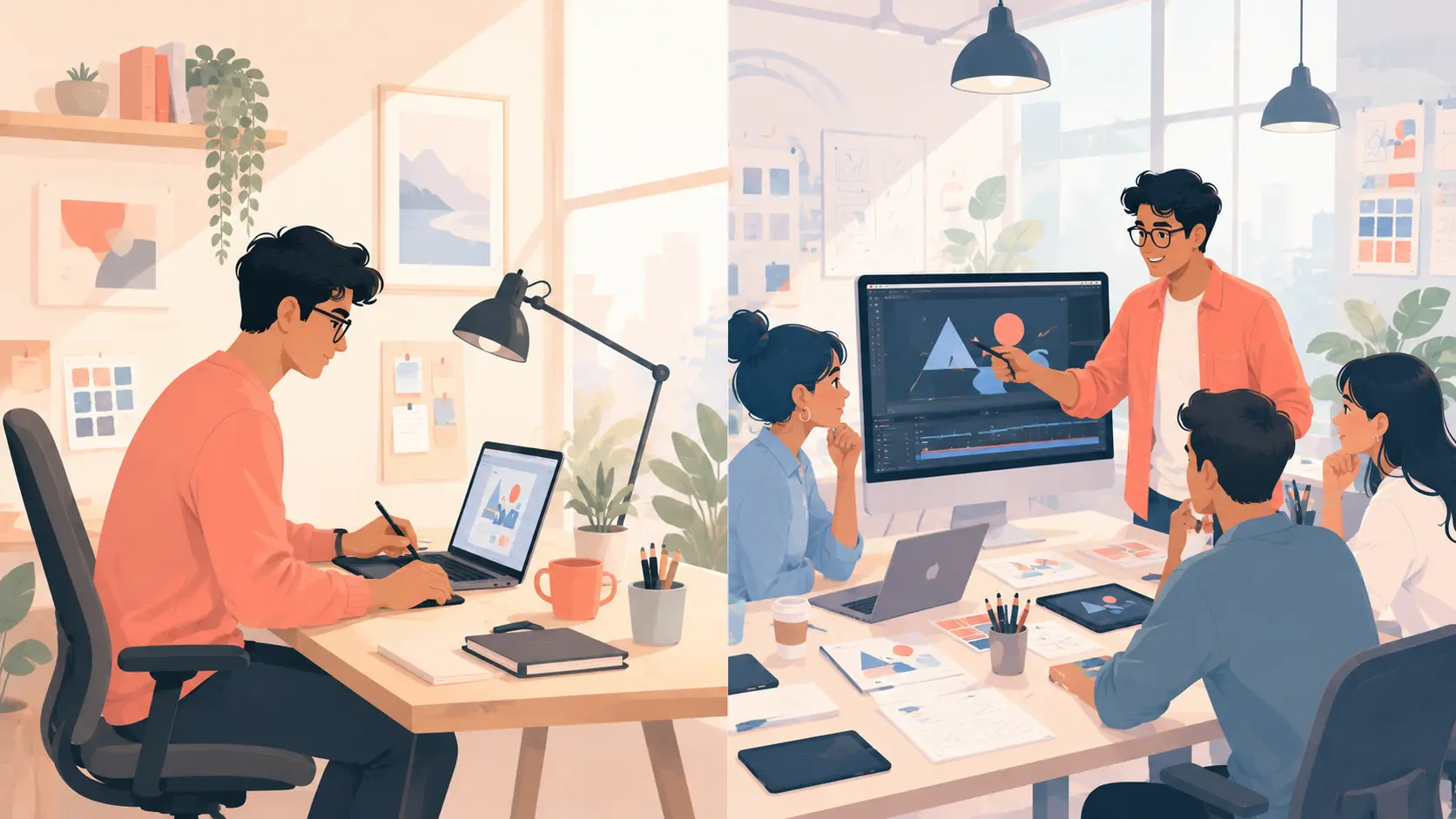
- Prism Media
- Thursday, June 6th, 2019
- 587 views
- no Comments
Freelance vs Studio Job: Which Path Is Right for Creative Professionals in 2026?
Freelance vs Studio Job: Which Path Is Right for Creative Professionals in 2026?
Prism Media Animation Insight | Career Guide 2026 | Freelance vs Studio
Almost every graduating student in animation, VFX, graphic design, or motion graphics eventually faces the same fork in the road: take a studio job, or go freelance. Social media makes freelancing look glamorous — work from anywhere, be your own boss, pick your projects. The reality is more nuanced, and the right choice depends heavily on where you are in your career, not just your personality.
At Prism Media Animation, we talk our students through this decision constantly, because getting it wrong early can slow a career down by years. Here’s an honest, practical comparison.
What a Studio Job Actually Offers
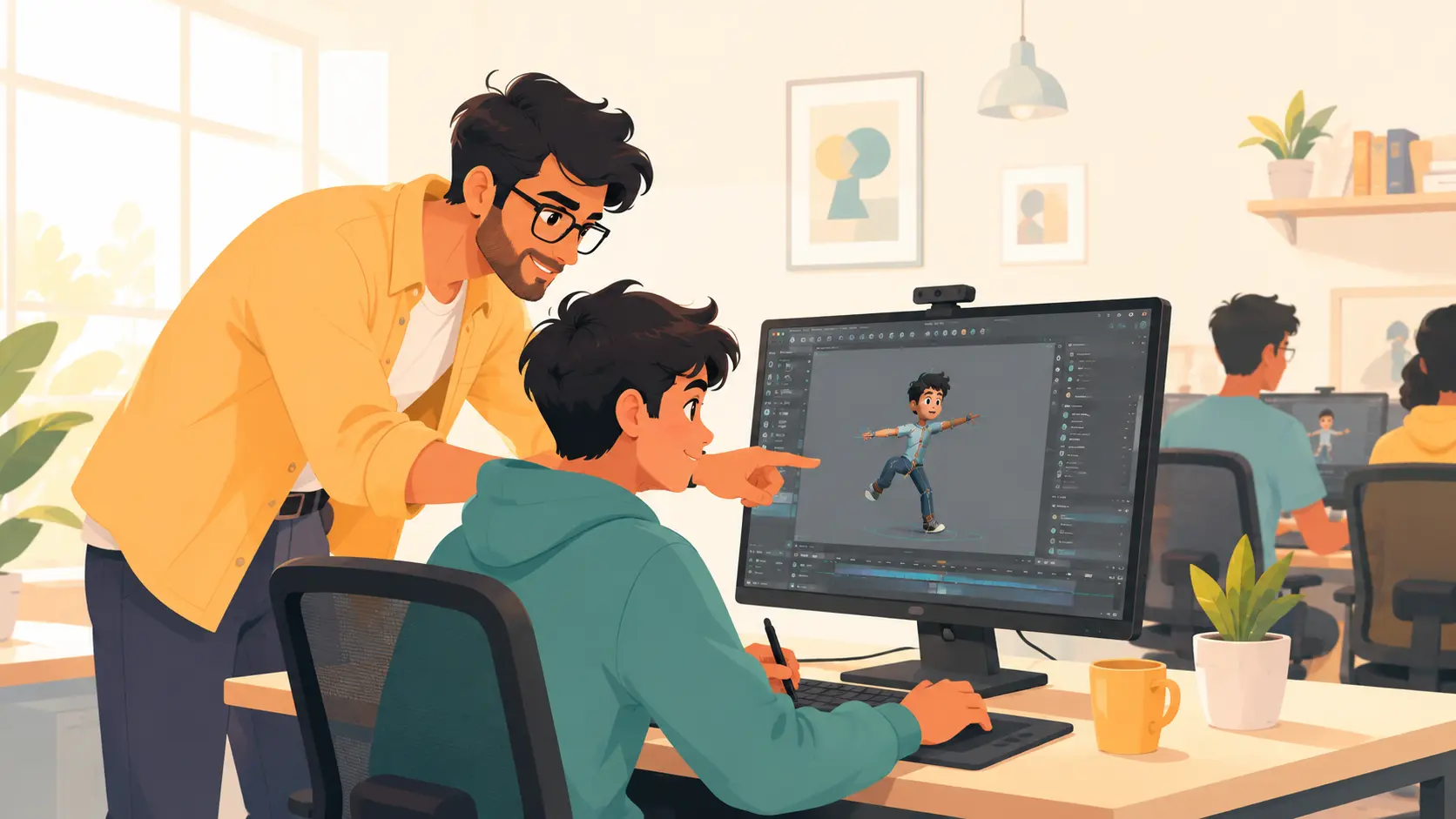
Working inside a studio, agency, or in-house creative team gives you something freelancing genuinely can’t replicate early on: structured mentorship. Senior artists reviewing your work, established pipelines showing you how professional projects actually get built, and exposure to production-scale problems you’d rarely encounter working solo. Studio roles also typically come with steadier income, defined working hours, and — critically for creative careers — the kind of credited, high-profile project experience that strengthens a portfolio faster than most solo freelance work can.
What Freelancing Actually Offers
Freelancing offers genuine flexibility — in when you work, which projects you take, and how you structure your career over time. It also offers a much faster path to higher per-project earnings once you have an established reputation and client base, since you’re not sharing revenue with a studio’s overhead. The trade-off is that freelancing requires running a small business alongside your creative work: chasing payments, managing multiple clients, marketing yourself, and absorbing the income instability that comes with project-based work.
8 Questions to Ask Before Choosing Your Path
1. How Much Production Experience Do You Actually Have?
Fresh graduates almost always benefit more from a studio job first. The mentorship and pipeline exposure you get in even a year or two at a studio typically accelerates your skill and portfolio far faster than freelancing solo from day one.
2. Can You Handle Inconsistent Income?
Freelance income is rarely predictable, especially in the first year or two. If you have financial responsibilities that require steady monthly income, a studio job — at least initially — removes a significant source of stress that can otherwise bleed into your creative work.
3. Do You Enjoy the Business Side of Creative Work?
Freelancing means you’re not just a designer or animator — you’re also a salesperson, an invoicer, a project manager, and sometimes a debt collector when clients delay payment. Some creatives thrive on this; others find it drains energy away from the actual craft.
4. How Strong Is Your Portfolio Right Now?
Clients hiring freelancers directly tend to be less forgiving of a thin portfolio than a studio hiring a junior employee they plan to train. If your portfolio isn’t strong yet, a studio role gives you paid time to build it under real production conditions.
5. Do You Have a Professional Network to Draw On?
Freelance work success is heavily dependent on referrals and repeat clients. Without an existing network — which studio experience often helps build — the first year of freelancing usually involves far more unpaid marketing effort than creative work.
6. What’s Your Tolerance for Client Management?
Studio jobs insulate you from a lot of direct client friction — account managers or producers usually handle that layer. Freelancing puts you face-to-face with client expectations, scope creep, and revision requests directly, which is a real skill in itself.
7. Are You Looking for Specialization or Variety?
Studio roles often mean deep specialization in one part of a pipeline — you might spend years primarily rigging, or primarily doing motion graphics for one type of client. Freelancing tends to expose you to more project variety, which some artists find energizing and others find scattering.
8. What Does Long-Term Success Look Like to You?
If your goal is eventually running your own studio or agency, freelancing builds the exact business skills you’ll need. If your goal is climbing toward senior or lead creative roles inside larger productions, studio experience is usually the faster, more direct path.
The Hybrid Path Most Experienced Professionals Actually Take
In practice, very few successful creative careers are purely one or the other. A common, often smart pattern looks like: two to four years in a studio building fundamentals, credited project experience, and a strong portfolio — followed by a transition into freelancing once you have the reputation, network, and financial cushion to handle the instability. Some professionals also blend both, taking a part-time or contract studio role while building a freelance client base on the side.
What This Means for Students Just Starting Out
If you’re still in training or just graduating, the honest advice is almost always the same: prioritize a studio role first, even if the pay feels modest compared to freelance rates you hear about online. The mentorship, structured feedback, and production experience you gain in those first few years compound into a much stronger freelance career later — if that’s still the direction you want to go.
Frequently Asked Questions About Freelance vs Studio Careers
Should I start freelancing right after graduating?
Generally, no — most creative professionals benefit significantly from at least one to two years of studio experience first, both for skill development and for building the portfolio and network freelancing depends on.
Can freelancing actually pay better than a studio job?
Yes, potentially — especially once you have an established client base and reputation. But early-career freelancing usually pays less predictably and often less overall than an equivalent studio role, once you account for unpaid business admin time.
Is it possible to do both freelance and studio work at the same time?
Yes, many professionals build a hybrid career — taking on freelance projects during evenings or weekends while employed at a studio, gradually transitioning to full freelance once their client base and financial cushion are strong enough.
What skills does freelancing require beyond creative ability?
Basic invoicing and contract knowledge, client communication and expectation-setting, project and time management, and self-marketing are all essential freelance skills that creative training alone typically doesn’t teach.
Want to Build a Career in Animation, VFX, or Design at Prism Media Animation?
Explore professional training in:
- Animation & VFX
- Graphic Design
- Video Editing & Motion Graphics
Prism Media Animation – Learn. Create. Transform.

Prism Media
Search
Categories
- Animation (9)
- Computer (2)
- graphic design (6)
- Photography (2)
- Uncategorized (6)
- Visual effects (2)
Latest Post
-
Monday, February 2nd, 2026
10 Things You Need to Know About a 3D Animation Career in 2026
-
Thursday, October 3rd, 2024
10 Software Tools Every 3D Animation Student Must Learn in 2026
-
Tuesday, July 25th, 2023
-
Monday, December 26th, 2022
Things to Check Before Choosing a 3D Animation Institute in Bhubaneswar
-
Saturday, July 9th, 2022

Book a Free Demo
Experience the difference with our programs! Book a free demo to explore how our courses can help you achieve your academic and career goals. Don't miss this opportunity! Schedule your free demo today and take the first step towards a brighter future!
Book Now© Copyright 2026 by PrismMedia
0 Comment